Ingredients
Equipment
Method
Curry:
- Cut the carrots into thick slices, each being about 1/2 inch thick
- Cut the potatoes into cubes. If using Russet potatoes or Idaho potatoes (or any other kind of potato high in starch content), soak them in an ice bath after cutting, while preparing the rest of the ingredients. This will help remove the excess starch from the potatoes, so that they hold well in the curry.
- If making the homemade curry roux, melt 6 tablespoons of butter or vegetable oil in a pan on medium-low heat. Add in the flour and stir constantly, for about 10-15 minutes. It may look clumpy at the beginning, but it will get smoother as the butter melts more. Make sure you keep stirring, otherwise it will burn very easily. You will know the roux is ready once it appears a brownish color. At this point, add in the curry powder. Stir this for only about a minute, until the spices are fragrant. Then, take the roux off the heat immediately to prevent the spices from burning.
- In a large pot, sauté the garlic and shallots until fragrant, for about a minute or two. Add in the sliced onions and sautee for about five more minutes. Add in the carrots and sauté for a few minutes until slightly softened. If using Yukon gold potatoes, you can add them in at the same time you add the carrots. If using potatoes with a higher starch content like Russet or Idaho, do not add them in yet.
- Add in the vegetable broth or vegetable bouillon + water and bring this to a boil.
- Once the broth is boiling, bring it to a simmer (between low and medium-low heat). Simmer the carrots and aromatics for about 15 minutes before adding in the potatoes (if using starchy kind). After 15 minutes, add in your potatoes and let it simmer for about 15 more minutes, stirring occasionally.
- After 15 minutes, add in your curry roux or curry cubes or homemade curry roux. If using the curry cubes, you will need to mix them with hot water to break them apart.
- Add in the frozen peas. Cook for about 5 minutes and add in soy sauce, vegan oyster sauce, and ketchup to taste. If the broth is too liquidy, add in a cornstarch slurry (1:1 mixture of cornstarch and water).
Rice:
- Wash your rice until the water achieves a clearish color. It usually takes about 4-5 washes to remove the excess starch. Soak it for about 15-20 minutes to remove even more of the starch.
- After about 15-20 minutes, drain the water and then pour water into the pot with a 1:1 rice-water ratio. For example, if using 2 cups of rice, pour 2 cups of water into the pot. If you prefer slightly less sticky rice, use 1 3/4 cups water.
- If using an instant pot, simply pressure cook on high for 5 minutes. Let it release naturally for about 10 minutes, and then you can do a manual release if needed. If using a rice cooker, follow the rice cooker instructions.
Tofu katsu:
- Cut the tofu block in half.
- To coat the tofu, I find that a cornstarch-water mixture or a flaxseed-water mixture is best for helping the bread crumbs stay on. If using cornstarch, simply mix cornstarch and water in a 1:1 ratio by adding 2 tablespoons cornstarch and 2 tablespoons cold water. If using flaxseed, mix flaxseed and water in a 1:3 ratio. For this recipe, I used 2 tablespoons flaxseed and 6 tablespoons water. After mixing, the mixture will take a few minutes to thicken, so let this sit for about 5 minutes.
- Dredge the tofu cutlets in the flaxseed or cornstarch mixture.
- Coat the dredged tofu in the panko breadcrumbs. Sprinkle with some salt, and your tofu katsu is now ready to fry.
- Pour some vegetable oil or any other neutral oil onto a pan on medium heat, place your tofu katsu on the pan, and fry until golden brown on one side. Then, flip over the katsu and do the same on the other side.
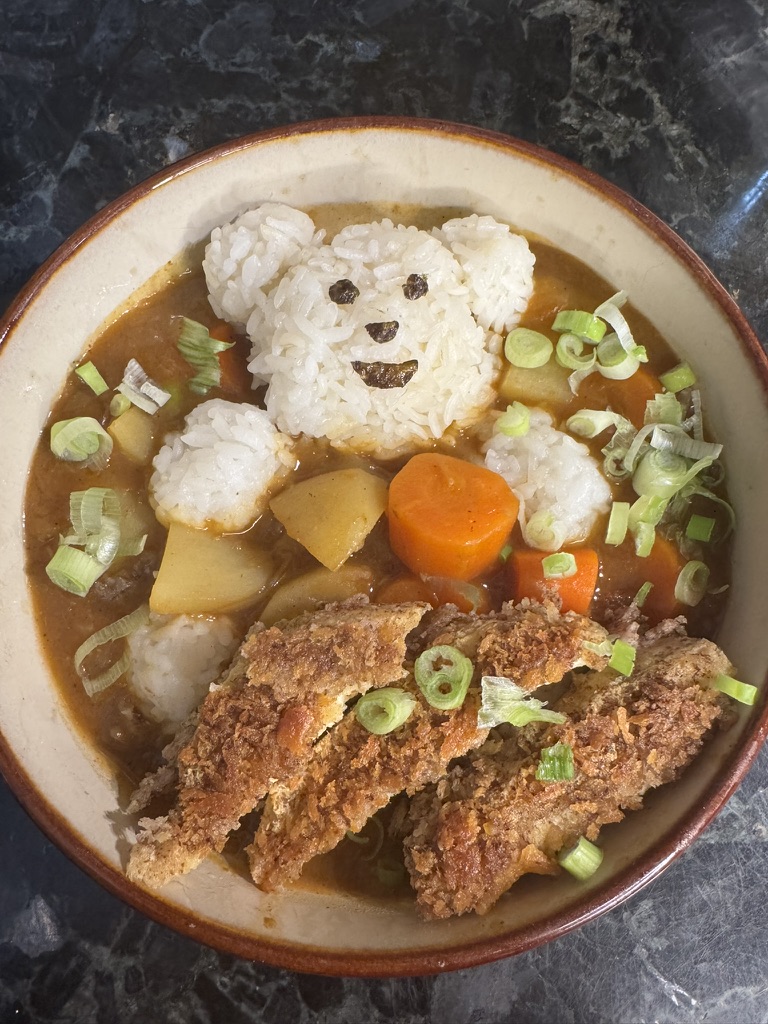
- Cut the tofu katsu into pieces. Place the rice in a bowl and pour the curry over it, and put the katsu on top. Your Japanese curry with tofu katsu is ready to serve!
- Optional step: You can arrange your bowl as shown in the recipe picture, if you'd like. Mold the head, ears, arms, and legs out of sticky rice. For the eyes, nose, and mouth, I cut them out from a sheet of Japanese seaweed and placed them on the face of the bear. Place the tofu katsu in the bowl, top with green onions, and enjoy!
- Leftovers can be enjoyed for a few days or so. You can store it in the fridge in an airtight container for about 5-6 days.
Notes
- Potatoes: Yukon gold potatoes typically work best for this recipe, as they have a low starch content and retain their shape better than potatoes with a higher starch content, like Russet potatoes or Idaho potatoes. You can still use other types of potatoes, just soak them in an ice bath after cutting, which helps prevent discoloration and removes excess starch so that they don’t disintegrate in the curry. If using potatoes with a high starch content, add them in later in the cooking process so they retain their shape.
- Curry roux/curry cubes: You can either use a homemade curry roux for this recipe, or store bought curry cubes. If using store-bought, I recommend using S&B Golden Curry cube.
- Curry powder: You can either use storebought curry powder or make it from scratch if you have all the spices on hand. If you’re making it from scratch, there are plenty of recipes online for it.
- Cornstarch slurry: If your curry ends up too liquidy, you can add a cornstarch slurry (a 1:1 mixture of cornstarch and water) to your curry to thicken to sauce. To make it, just mix cornstarch and water in a 1:1 ratio separately, and add it to your curry. Make sure not to mix plain cornstarch directly into the curry and to always mix it with water first, otherwise it will make the curry clumpy. I usually do about 1-2 teaspoons cornstarch combined with 1-2 teaspoons water.